

In the electrical and electronics industry, for the protection of cables and components, choosing between adhesive-lined heat shrink tubing and single-wall heat shrink tubing is crucial. Here’s a concise guide to help you distinguish them and select the right product for your needs.
1. Structural and Material Differences
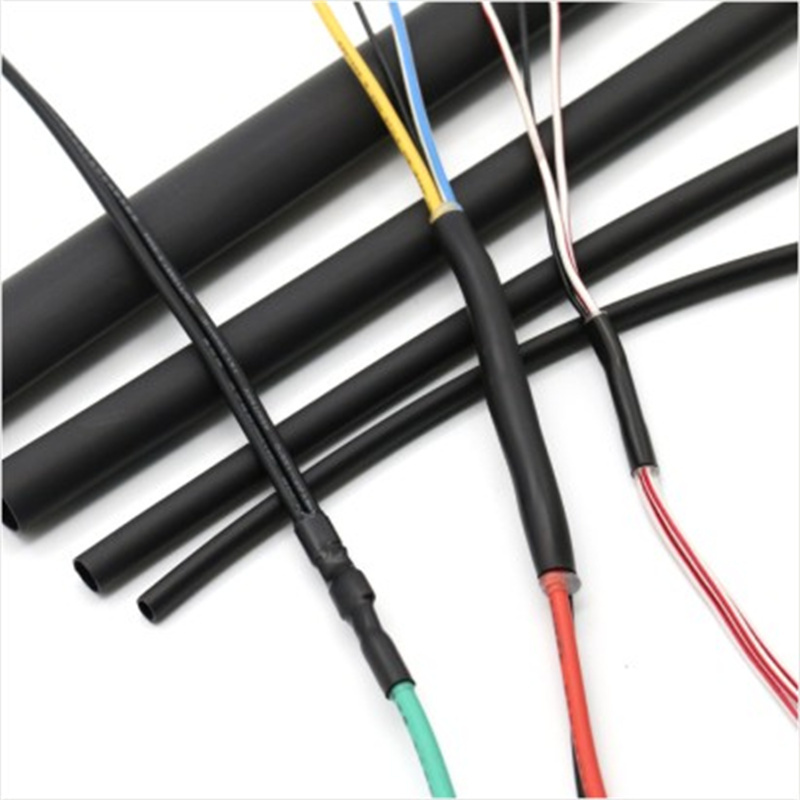
- Single-Wall Heat Shrink Tubing (Right Image)Made of polyolefin material, it is a single-layer product. It is mainly used for insulation, identification, and basic protection.
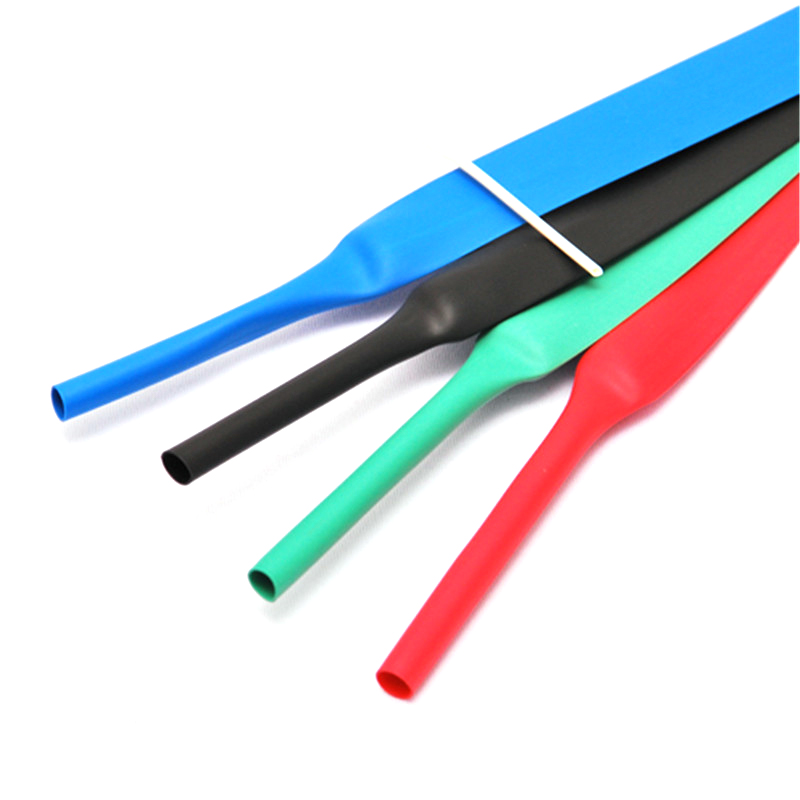
- Adhesive-Lined Heat Shrink Tubing (Left Image)It consists of two layers: the outer layer is made of flame-retardant polyolefin (PE) material, and the inner layer is a transparent EVA hot-melt adhesive layer. The adhesive layer is the key difference, enabling waterproof, moisture-proof, and anti-corrosion sealing.
2. Performance and Specification Comparison
| Feature | Single-Wall Heat Shrink Tubing | Adhesive-Lined Heat Shrink Tubing |
| Shrink Ratio | 2:1 | 3:1,4:1 |
| Waterproof / Sealing | None | Yes (thanks to the inner adhesive layer) |
| Flame Retardancy | Yes (transparent type excluded) | Yes (outer material) |
| Operating Temperature | -55℃ ~125℃ | -45℃~125℃ |
| Main Standards | UL224 125C 600V VW-1 | UL224 125C 600V,ROHS |
3. Application Scenarios
- Choose Single-Wall Heat Shrink TubingWhen you need to provide insulation, color identification, or basic mechanical protection for electronic components, wire harnesses, or cable terminals.Examples: Indoor electronic equipment, standard wire harness identification, non-sealed electrical connections.
- Choose Adhesive-Lined Heat Shrink TubingWhen you need waterproof, moisture-proof, anti-corrosion, or airtight sealing, such as outdoor wiring, automotive wire harnesses, or marine electronic equipment.Examples: Connections in the automotive engine compartment, wiring of offshore equipment, and any applications exposed to humid or chemical environments.
By understanding the differences in structure, performance, and usage scenarios between the two, engineers and purchasers can make informed decisions to ensure optimal protection and functionality for their projects.