

In pipeline engineering and cable protection, corrugated tubing is a commonly used protective material. Classified by structure, it is mainly divided into single layer and double layer types, which differ significantly in material, structural characteristics and application scenarios.
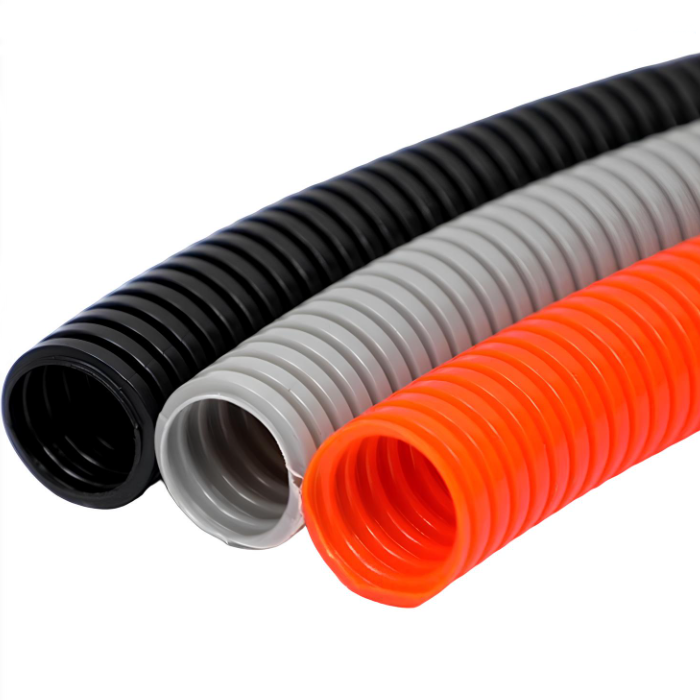
Single wall corrugated tube is extruded from a single material with a wavy tube wall. Common materials include PA, PE and PP. PA has excellent wear resistance and is commonly used for wire harness protection in automobile manufacturing, mechanical equipment and other applications with high wear requirements. PE features good flexibility and corrosion resistance and is mostly used for wall wiring in construction and temporary circuit protection. PP has strong acid and alkali resistance and is typically applied to liquid delivery or exhaust in chemical environments.
It has a simple structure, light weight, small bending radius and easy installation. However, its compressive capacity is relatively weak, making it unsuitable for heavy duty underground use. It is mainly used in scenarios such as electrical wiring, equipment connection and light drainage to play the roles of insulation, cable protection and anti-interference.
Double wall corrugated pipe has a structure of smooth inner wall + corrugated outer wall with a hollow space between the two layers. Common materials are HDPE and PE. HDPE is the mainstream choice with the characteristics of high strength, corrosion resistance and long service life. It has high ring stiffness such as SN4 and SN8 grades and can withstand large external pressure. PE has lower cost and is suitable for general drainage, communication sheathing and other scenarios with low pressure requirements.
The double wall design has a clear division of functions. The corrugated outer wall enhances compressive capacity and disperses soil load while the smooth inner wall reduces fluid resistance, is not easy to accumulate dirt and is conducive to smooth drainage. This structure enables it to have excellent mechanical properties and durability while maintaining light weight.
It is widely used in municipal sewage discharge, rainwater drainage, underground protection of communication cables, farmland irrigation and other projects. It is especially suitable for underground laying, can withstand vehicle loads and deep soil pressure, and has a service life of more than 50 years.